
When you start trading cryptocurrency on an exchange, one of the first decisions you face on the order entry screen is choosing an order type. Selecting the wrong option can cause you to pay higher trading fees or purchase assets at an unexpectedly high price.
The two most common order types on any cryptocurrency exchange are market orders and limit orders. Both allow you to buy or sell digital assets, but they execute trades under completely different rules.
Below is a simple guide explaining what a crypto limit order vs market order is, how they affect trading fees, and when you should use each option.
1. What Is a Market Order?
A market order is an instruction to buy or sell a cryptocurrency immediately at the best available price on the order book.
-
How It Works: When you place a buy market order, the exchange automatically matches your request with the lowest available ask prices listed by sellers.
-
Execution Speed: Instantaneous. The moment you click the buy or sell button, your trade is completed within milliseconds.
-
Main Risk (Slippage): During high market volatility, the asset price can shift quickly between the moment you submit your order and when it executes. This unexpected difference between your expected price and actual execution price is known as slippage.
2. What Is a Limit Order?
A limit order is an instruction to buy or sell a cryptocurrency only at a specified target price or better.
-
How It Works: A buy limit order will only execute at your set limit price or lower. A sell limit order will only execute at your set limit price or higher.
-
Execution Speed: Delayed or conditional. Your order sits in the exchange’s order book until another trader agrees to sell or buy at your exact price. If the market never reaches your price target, your order remains unfilled.
-
Zero Slippage: You have complete control over the maximum price you pay or the minimum price you accept.
Before executing active trades on centralized exchanges, ensure your long-term holdings are secured offline by following our guide on how to backup crypto seed phrase safely.
3. Key Differences: Market Order vs. Limit Order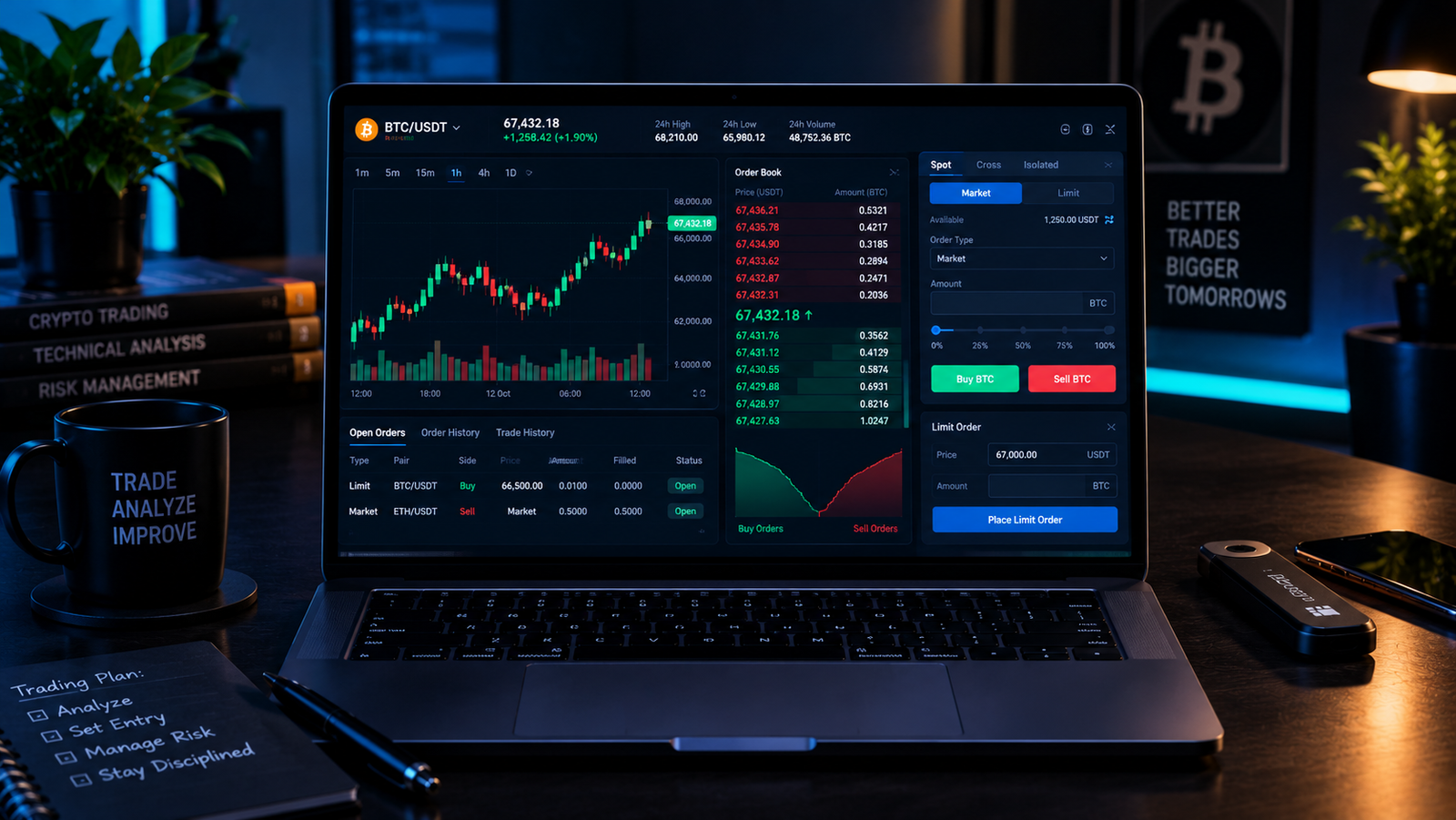
Understanding how these two trade types compare across key trading factors helps you make smarter decisions on the order book:
| Feature | Market Order | Limit Order |
| Execution Speed | Immediate | Dependent on market movement |
| Price Guaranteed? | No (subject to slippage) | Yes (exact limit price or better) |
| Execution Guaranteed? | Yes (provided there is liquidity) | No (may never fill if price is missed) |
| Exchange Fee Type | Taker Fee (usually higher) | Maker Fee (usually lower) |
| Best Used For | Fast entry/exit during calm markets | Strategic entry/exit at precise price levels |
4. Maker Fees vs. Taker Fees Explained
Cryptocurrency exchanges charge different trading fee rates depending on whether your order adds or removes liquidity from the market order book.
-
Taker Fees (Market Orders): Because a market order takes liquidity away from the order book instantly, you are classified as a market “taker.” Exchanges typically charge slightly higher percentage fees for taker orders.
-
Maker Fees (Limit Orders): Because a limit order rests on the order book until matched, it provides liquidity to the exchange. As a market “maker,” you are often rewarded with lower trading fees.
To ensure long-term holding balances remain safe after accumulating assets via limit orders, learn the security differences in our breakdown of the difference between hot wallet and cold wallet options.
5. When to Use Each Order Type
Knowing which order type to select depends on your immediate trading goals:
Use a Market Order When:
-
You need to buy or sell an asset immediately during an urgent market movement.
-
You are trading highly liquid assets (like Bitcoin or Ethereum) where market spread and slippage are minimal.
-
The total transaction size is small enough that price shifts will not significantly affect your entry cost.
Use a Limit Order When:
-
You want to buy a coin during a dip or sell at a profit target without sitting in front of a chart all day.
-
You are trading low-liquidity altcoins where large market orders cause massive price slippage.
-
You want to reduce exchange trading fees over time by acting as a market maker.
Mastering entry strategies alongside chart analysis methods such as learning how to read a crypto candlestick chart allows you to set precise limit orders at key support and resistance levels.
Want More Insights to Grow Your Digital Presence & Daily Productivity?
Whether you need to fix your website’s technical performance or build a smarter, burnout-free work routine, NewsUpTo delivers practical guides to keep you ahead.





Leave feedback about this