

The Role of Artificial Intelligence in Modern Technology.
Technology is changing the world faster than ever before. From smartphones and computers to online services and smart devices, technology has become an important part of modern life. One of the most significant developments in recent years is Artificial Intelligence, commonly known as AI. Artificial Intelligence allows computers and machines to perform tasks that normally require human intelligence, such as understanding language, recognizing images, solving problems, and making decisions.
AI is no longer limited to research laboratories or large technology companies. It is now being used in education, healthcare, business, transportation, entertainment, banking, and many other industries. As AI continues to develop, it is becoming an important part of the digital future.
What Is Artificial Intelligence?
Artificial Intelligence is a branch of technology that focuses on creating computer systems capable of performing tasks that usually require human intelligence. These tasks can include learning from information, identifying patterns, understanding speech, answering questions, and making predictions.
For example, when a smartphone recognizes a person’s face to unlock the device, AI technology may be involved. Similarly, when a streaming platform recommends a movie based on previous choices, AI can analyze user behavior and suggest suitable content.
Machine learning is one of the major technologies behind AI. Instead of being programmed for every possible situation, machine-learning systems can learn from data and improve their performance over time.
AI in Everyday Life
Many people use AI every day without even realizing it. Search engines use intelligent systems to provide relevant results. Voice assistants can understand spoken commands and respond to questions. Social media platforms use algorithms to recommend posts, videos, and other content.
Navigation applications can also use AI and data analysis to estimate traffic conditions and suggest routes. Online shopping websites may recommend products based on previous searches and purchases.
These examples show that AI is not simply a futuristic concept. It has already become part of modern digital life.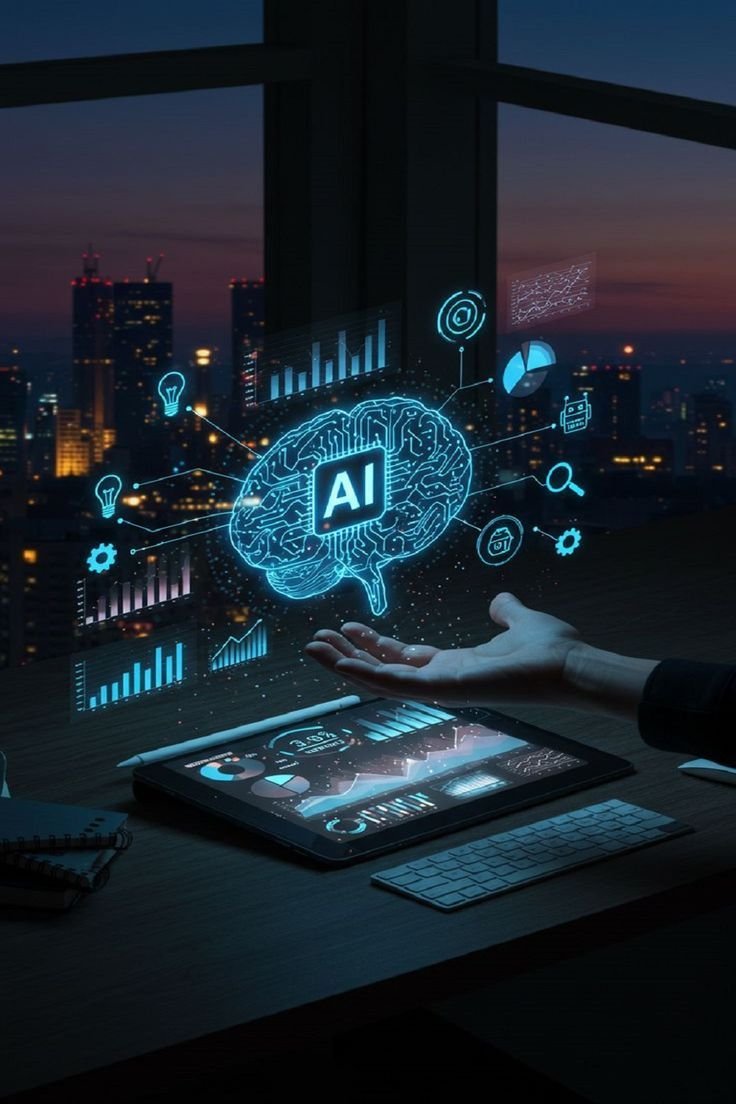
Artificial Intelligence in Education
Education is another area where AI is creating new opportunities. Digital learning platforms can provide students with personalized learning experiences. AI-powered systems can analyze a student’s performance and identify subjects or topics that may require additional practice.
AI tools can also help students understand difficult concepts, organize information, and practice different skills. Teachers can use technology to prepare educational material, analyze student progress, and manage certain administrative tasks.
However, technology should support education rather than replace teachers. Human teachers provide encouragement, creativity, emotional understanding, and personal guidance that technology cannot completely reproduce.
AI in Healthcare
Healthcare is one of the most important fields where AI can make a difference. Modern AI systems can help analyze large amounts of medical information and identify patterns that may be difficult to detect manually.
AI can assist healthcare professionals in areas such as medical imaging, research, patient monitoring, and administrative work. It can also help researchers study diseases and develop new treatments more efficiently.
The use of AI in healthcare must be handled carefully because medical information is highly sensitive. Human professionals remain essential for making important medical decisions and providing personal care.
AI and Modern Businesses
Businesses are increasingly using AI to improve their operations. Companies can use AI to analyze customer behavior, identify market trends, automate repetitive tasks, and improve communication.
For example, customer-support systems can use AI-powered chatbots to answer common questions. Businesses can also use intelligent software to organize data, detect unusual activity, and create reports.
Small businesses can benefit from AI as well. Affordable digital tools can help small companies with marketing, customer communication, content planning, and data analysis. This allows businesses to save time and focus more on important goals.
AI and Creativity
Artificial Intelligence is also changing creative industries. Designers, writers, photographers, musicians, and video creators can use AI-powered tools to generate ideas and speed up certain parts of their creative process.
For example, AI can help designers explore different visual concepts or help content creators organize ideas. Video-editing software can use intelligent features to simplify editing tasks.
However, creativity still depends heavily on human ideas and judgment. AI can generate possibilities, but people decide what is meaningful, useful, appropriate, and original.
Benefits of Artificial Intelligence
AI provides many potential benefits. One major advantage is efficiency. Computers can process large amounts of information much faster than humans. This can help organizations save time and make better use of resources.
Another benefit is automation. Repetitive tasks can sometimes be handled by software, allowing people to spend more time on complex and creative activities.
AI can also improve decision-making by identifying patterns in large datasets. In areas such as business, science, and transportation, this can help people understand information and make more informed decisions.
Furthermore, AI can make some digital services more personalized. Applications can learn from user preferences and provide recommendations that are more relevant to individual needs.
Challenges and Risks of AI
Although Artificial Intelligence has many advantages, it also creates challenges. One important concern is privacy. AI systems often depend on large amounts of data, so organizations must protect personal information responsibly.
Another concern is inaccurate information. AI systems can sometimes produce incorrect or misleading results. This is why important information should be checked using reliable sources and human judgment.
Employment is another topic of discussion. Automation may change the way some jobs are performed. At the same time, new careers and skills can emerge as technology develops. Education and training can help people adapt to changing workplaces.
There are also concerns about fairness and bias. If an AI system is trained using biased information, its results may also be unfair. Developers need to carefully test and monitor AI systems to reduce these problems.
The Importance of Responsible AI
As Artificial Intelligence becomes more powerful, responsible use becomes increasingly important. Technology should be designed with safety, privacy, fairness, and transparency in mind.
Companies and developers should explain how important AI systems work when possible and should provide ways for people to report problems. Users should also understand that AI is a tool rather than an unquestionable source of truth.
Governments, educational institutions, technology companies, and communities all have a role to play in creating responsible technology. Cooperation between these groups can help society benefit from AI while reducing potential risks.
The Future of Artificial Intelligence
The future of AI is likely to bring even more changes. Intelligent systems may become more capable of understanding language, images, data, and complex tasks. Businesses may use AI more extensively, while schools and other organizations may develop new ways to integrate intelligent technology into their work.
Future technology will also create demand for new skills. Digital literacy, critical thinking, creativity, communication, and problem-solving are likely to remain important.
Rather than thinking only about what AI can do, people should also consider how it should be used. The most successful future will likely be one where humans and technology work together.
How People Can Prepare for an AI-Driven Future
People can prepare for technological changes by developing digital skills and staying curious about new developments. Learning how modern technology works can make it easier to adapt to new tools and workplaces.
Students can focus on problem-solving, communication, creativity, and technology-related skills. Professionals can continue learning and updating their knowledge as their industries change.
It is also important to develop critical thinking. People should not automatically trust every result produced by an AI system. Checking information, comparing sources, and thinking carefully before making decisions are valuable skills in the digital age.
Conclusion
Artificial Intelligence is one of the most important developments in modern technology. It is already influencing education, healthcare, business, entertainment, communication, and many other areas.
AI can improve efficiency, automate repetitive tasks, analyze information, and create new opportunities. At the same time, it brings challenges involving privacy, accuracy, employment, and fairness.
The future of Artificial Intelligence will depend not only on how advanced the technology becomes but also on how responsibly people use it. By combining technological innovation with human creativity, critical thinking, and ethical responsibility, society can make better use of AI.
Technology should ultimately serve people and help create a more efficient, connected, and innovative world. Artificial Intelligence has the potential to play a major role in that future, but human judgment will remain an essential part of the journey.



Leave feedback about this