
No matter how high your product quality or service standards are, every business owner eventually encounters upset, frustrated, or unreasonable customers.
Handled incorrectly, a difficult customer interaction can lead to negative online reviews, lost revenue, and unnecessary stress for your team. Handled correctly, however, a challenging situation gives you a chance to demonstrate exceptional professionalism, resolve hidden service flaws, and turn an unhappy buyer into a loyal advocate.
Below is a practical, step-by-step framework on how to handle difficult customers in business while keeping your composure and brand reputation intact.
1. Remain Calm and Control Your Reaction
When a customer expresses anger or raises their voice, your natural reaction might be to become defensive. However, matching their emotional intensity will quickly escalate the conflict.
-
Take a Pause: Take a deep breath before responding. Remember that the customer’s frustration is usually directed at the situation or product, not at you personally.
-
Maintain Tone of Voice: Speak in a steady, calm, and moderate tone. A tranquil demeanor encourages the upset customer to lower their voice and match your level of composure.
-
Control Body Language: If meeting in person, maintain open posture, keep your hands relaxed, and make respectful eye contact.
2. Practice Active Listening Without Interrupting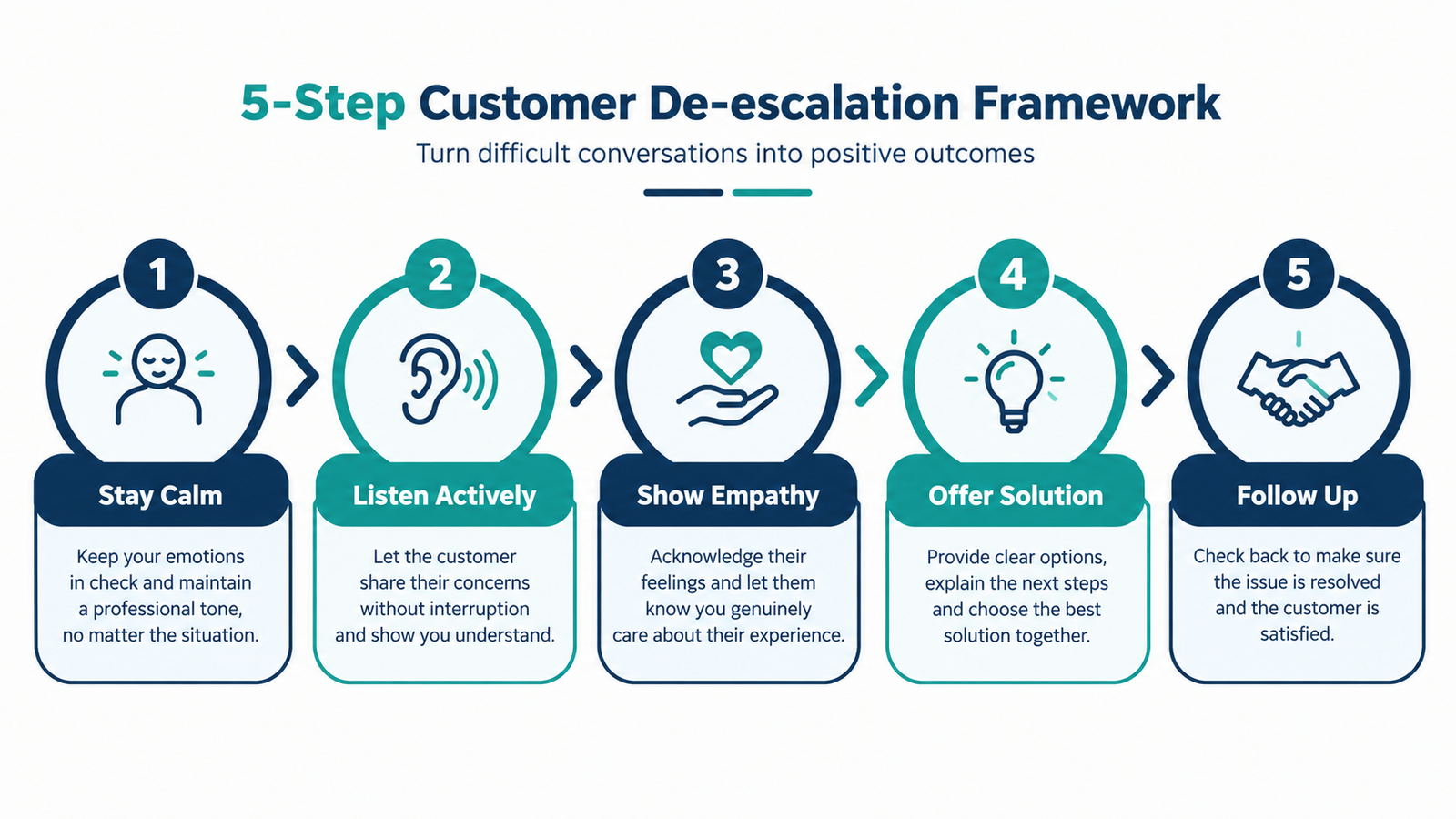
An upset customer wants to feel heard above everything else. Interrupting them with excuses or policy explanations, even if you are factually correct, will only increase their frustration.
-
Let Them Speak: Allow the customer to explain their issue fully without cutting them off.
-
Take Notes: Write down specific details, such as order numbers, dates, or product names. This shows that you take their concern seriously.
-
Reflect Their Message: Repeat key points back to them to confirm understanding (e.g., “What I am hearing is that your delivery arrived two days late and the item was damaged. Is that correct?”).
3. Acknowledge Their Feeling and Apologize Sincerity
Validating the customer’s frustration breaks down emotional barriers and shifts the interaction from an argument into a collaborative problem-solving session.
-
Show Empathy: Use simple, empathetic phrasing like, “I understand how frustrating it is when a delivery is delayed,” or “I see why this situation caused an inconvenience for your project.”
-
Offer a Clean Apology: Acknowledge the flaw in the experience without blaming specific employees or external suppliers. Say, “I am sorry that this experience did not meet your expectations.”
Documenting resolution protocols within your team using standard operating procedures for small business ensures every employee knows exactly how to handle refund or replacement requests consistently.
4. Focus on Solutions and Provide Clear Options
Once the emotional tension lowers, transition the conversation toward resolving the actual problem.
-
Offer Practical Options: Present one or two clear, realistic solutions (e.g., offering an immediate replacement, issuing a partial refund, or providing a discount on future orders).
-
Avoid Saying “No”: Reframe negative statements into constructive actions. Instead of saying “We cannot issue a refund,” say “What I can do right now is offer a free store credit or replace the item immediately.”
-
Act Quickly: Resolve the issue as fast as possible. Prolonging resolution times increases customer anxiety and dissatisfaction.
5. Set Firm Professional Boundaries When Necessary
While satisfying customers is essential for business growth, your team should never tolerate verbal abuse, threats, or harassment.
-
Establish Lines: If a customer uses profanity or personal insults, state your boundaries calmly: “I am eager to help you resolve this issue, but I need us to keep this conversation professional.”
-
Know When to Disconnect: If the abusive behavior continues despite warnings, politely end the interaction or escalate the matter to a senior manager.
-
Document the Interaction: Keep detailed records of unreasonable behavior, emails, or phone logs in case legal or account termination steps are needed.
Maintaining strong customer communication protocols is particularly important when learning how to start a service business with no money, as early client reviews shape your brand reputation significantly.
6. Learn From the Experience and Update Processes
Every difficult customer interaction offers valuable feedback about your operational systems, product design, or marketing expectations.
-
Identify Patterns: If multiple customers complain about the same onboarding step or delivery delay, the problem lies in your system, not the customers.
-
Refine Customer Expectation: Ensure your sales messaging aligns with your actual product delivery to prevent misunderstandings early when testing how to validate a business idea.
Want More Insights to Grow Your Digital Presence & Daily Productivity?
Whether you need to fix your website’s technical performance or build a smarter, burnout-free work routine, NewsUpTo delivers practical guides to keep you ahead.






Leave feedback about this