
Web2 vs Web3: What is the Real Difference for Everyday Users?
If you have spent any time browsing the tech or crypto news lately, you have likely come across the term Web3. Promoters call it the future of the internet, while critics dismiss it as unnecessary hype.
To understand what it actually means, you do not need a degree in computer science. At its core, the shift from Web2 to Web3 is not about fancy code; it is about who holds power, privacy, and ownership on the internet.
In this guide, we break down the real, practical differences between Web2 and Web3 in simple language so you can understand how your daily internet experience is changing.
The 3 Eras of the Internet: Read, Write, and Own
To understand Web3, it helps to look briefly at how we got here:
-
Web1 (Read-Only): In the 1990s and early 2000s, the web consisted of static HTML pages. You could read news, search for basic info, or view personal pages, but you could not interact, post comments, or create accounts easily.
-
Web2 (Read-Write): Starting in the mid-2000s, platforms like Facebook, YouTube, Google, and Wikipedia emerged. Users could now write posts, upload photos, interact, and stream content. However, centralized companies hosted all the servers and controlled the data.
-
Web3 (Read-Write-Own): Web3 represents the next evolution. Powered by public blockchain networks, Web3 allows users to read, create content, and directly own their identity, money, and digital items without depending entirely on big tech companies.
Key Differences for Everyday Users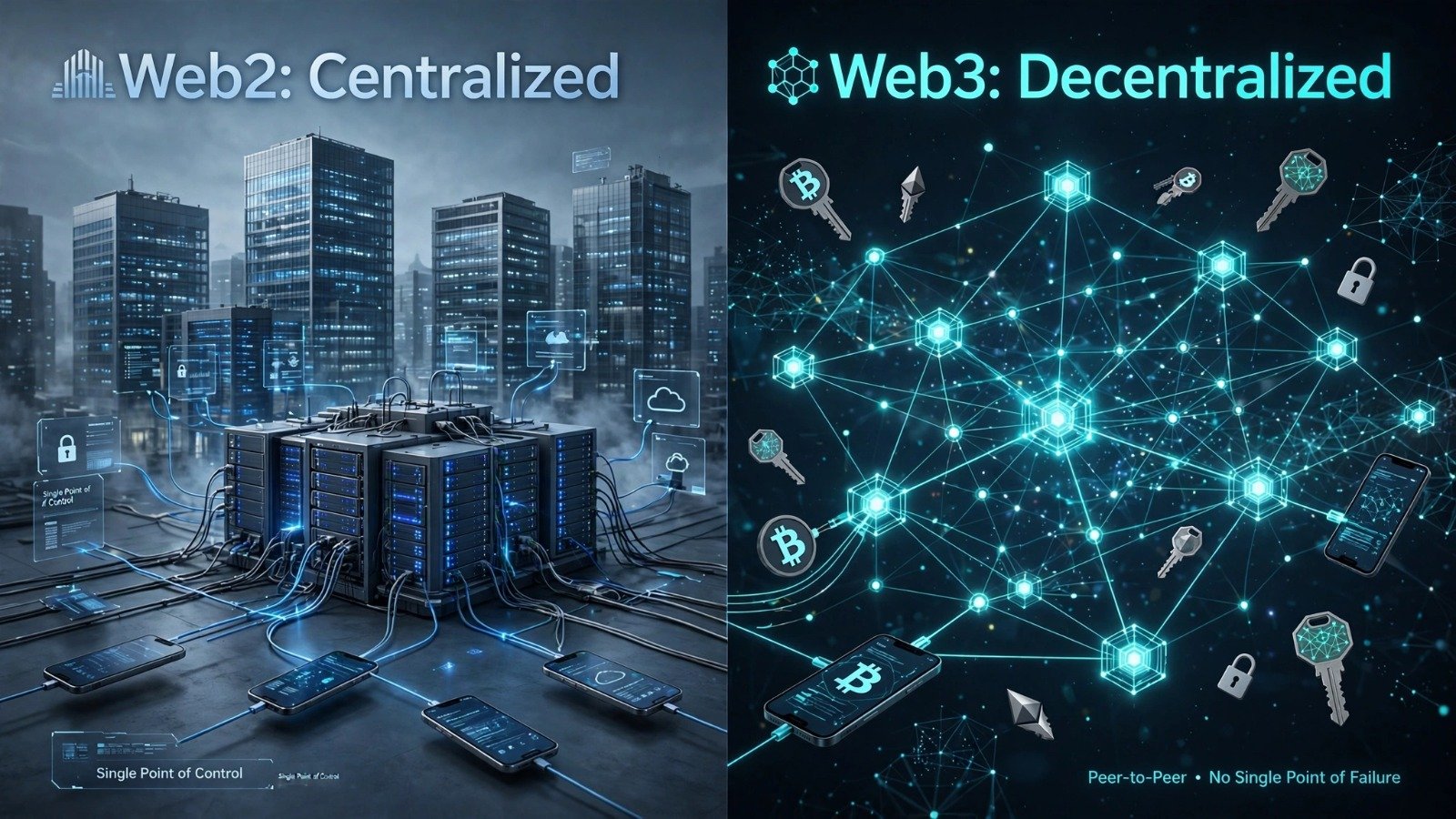
1. Data Ownership and Privacy
In Web2, your personal data is stored in centralized company databases. Tech platforms record your browsing history, clicks, location, and shopping habits, often using this information to show targeted ads or selling aggregated data to third parties.
In Web3, your identity and activity are linked to a public blockchain address or digital wallet controlled by you. You decide which applications can connect to your wallet and what minimal details they can view.
2. How You Log In
In Web2, logging into a website usually requires an email, password, or using “Sign in with Google” or “Sign in with Facebook” buttons. If that company suspends your account or shuts down the login service, you lose access to all linked services.
In Web3, you log in by connecting a digital crypto wallet. You do not share passwords, phone numbers, or email addresses. Your wallet private key belongs only to you, giving you full control over your digital identity across compatible apps.
3. Digital Item Ownership
In Web2, when you buy an in-game skin, a movie, or a digital book, you are technically purchasing a license to use it within that platform’s rules. If the platform closes down or bans your account, those items vanish.
In Web3, digital items, collectibles, and assets are minted as tokens on a blockchain. They reside directly in your crypto address. Even if the app or game developer closes down, the digital asset remains in your wallet and can potentially be transferred or sold elsewhere.
4. Financial Transactions
In Web2, sending money online relies on traditional financial institutions, credit cards, and payment processors like PayPal or Stripe. Payments usually take processing time, involve transaction fees, and require identity verification.
In Web3, payments are built directly into the web protocol using cryptocurrencies or stablecoins. You can send funds directly peer-to-peer to anyone globally in seconds without needing bank approval.
Web2 vs Web3: At a Glance
-
Web2 Characteristics:
-
Centralized control by big tech companies
-
Account logins via email and passwords
-
Free services monetized through user data and ads
-
High convenience and fast, simple user experience
-
Risk of account bans, content censorship, and data leaks
-
-
Web3 Characteristics:
-
Decentralized networks powered by blockchain
-
Wallet-based single sign-on without personal info
-
Direct user ownership of digital tokens and assets
-
Increased user control over privacy and security
-
Learning curve involving wallets, keys, and self-responsibility
-
Current Trade-Offs: Why Hasn’t Web3 Fully Replaced Web2?
While Web3 offers clear privacy and ownership benefits, everyday adoption remains a gradual process due to several ongoing challenges:
-
User Experience Complexity: Managing private keys, backing up seed phrases, and paying network gas fees is harder for non-technical users than simple password resets.
-
Speed and Scalability: Centralized Web2 servers can process tens of thousands of requests per second instantly. Blockchain networks are improving fast, but decentralized confirmation still takes more time.
-
Irreversible Transactions: In Web2, if you send money to the wrong account or forget your password, customer support can help recover it. In true Web3, there is no central customer service desk; if you lose your private key, your assets are inaccessible.
Want More Insights to Grow Your Digital Presence & Daily Productivity?
Whether you need to fix your website’s technical performance or build a smarter, burnout-free work routine, NewsUpTo delivers practical guides to keep you ahead.




Leave feedback about this