
Taking control of your personal finances can feel overwhelming, especially if you have never created a formal spending plan before. Many people associate the word “budget” with restriction or stress. In reality, a budget is simply a tool that gives you control over your money, helping you reach your long-term goals without constant financial worry.
Building a budget does not require complex accounting software or advanced math skills. By following a clear, step-by-step framework, you can map out your income and expenses in less than an hour.
Below is a complete, beginner-friendly guide explaining how to make a budget for beginners, along with practical tips to stick to your plan smoothly..
1. Calculate Your Net Monthly Income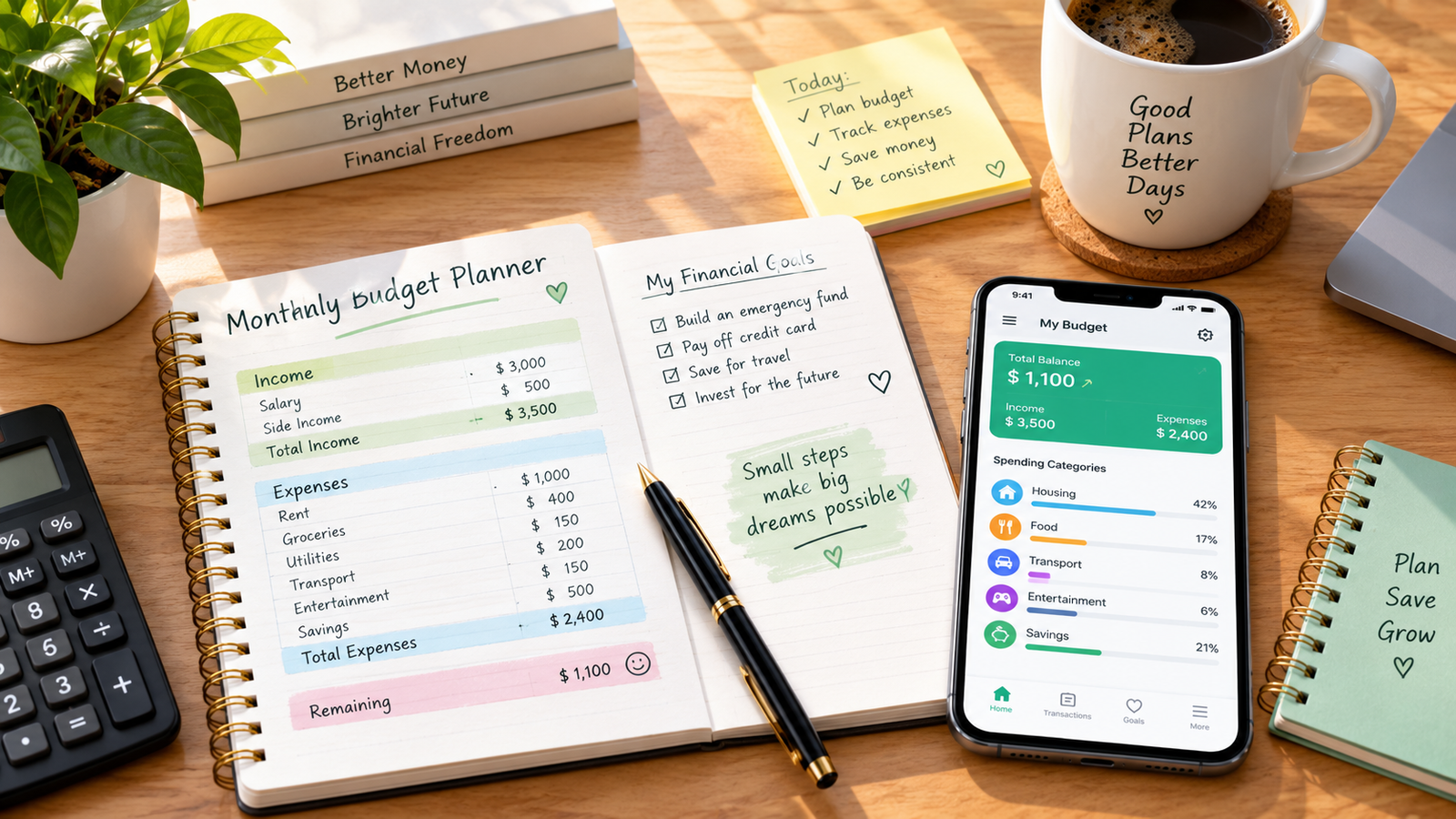
The first step in creating any budget is determining exactly how much money enters your bank account each month.
-
Focus on Net Income: Base your calculations on your net income (take-home pay after taxes and payroll deductions), rather than your total gross salary.
-
Account for Irregular Income: If you work freelance hours or earn variable commissions, calculate your average monthly take-home pay over the last three to six months to establish a realistic baseline.
-
Include Side Earnings: Add any consistent secondary income sources, such as freelance work, rental income, or recurring digital sales.
2. Track and Categorize Your Monthly Expenses
Before setting future spending limits, analyze where your money has gone over the past two to three months by reviewing bank and credit card statements.
Expenses fall into two distinct categories:
-
Fixed Expenses: Essential bills that remain constant every month, such as rent or mortgage payments, insurance premiums, utility base bills, and loan repayments.
-
Variable Expenses: Costs that change from month to month, including groceries, dining out, gas, entertainment, clothing, and subscription services.
Understanding where variable spending overlaps with borrowing habits connects directly with concepts in our good debt vs bad debt explanation.
3. Apply the 50/30/20 Budgeting Rule
The 50/30/20 framework is one of the most effective, straightforward budgeting systems for beginners. It divides your net income into three simple categories:
[ 50% Needs ] + [ 30% Wants ] + [ 20% Savings & Debt ] = 100% Net Income
| Budget Category | Percentage | Examples |
| Needs | 50% of Income | Housing, groceries, basic utilities, transportation, minimum debt payments |
| Wants | 30% of Income | Dining out, entertainment, hobbies, streaming subscriptions, vacations |
| Savings & Extra Debt | 20% of Income | Emergency fund savings, index fund investments, high-interest debt payoffs |
Allocating funds toward yield-generating accounts ties into our guide explaining what is apy in savings account. Maintaining responsible payment schedules also helps protect your credit rating, as detailed in our breakdown of credit score vs credit report difference.
4. Choose Your Budgeting Method
Select a tracking style that fits your personal lifestyle and tech comfort level:
-
Pen and Paper / Spreadsheets: Ideal for people who like manual entry and visual control over every dollar.
-
Digital Budgeting Apps: Great for automated tracking, linking bank accounts, and receiving instant spending notifications.
-
The Envelope System: A cash-based system where you put allocated physical cash into labelled envelopes for variable categories like groceries and dining. Once an envelope is empty, spending in that category pauses until next month.
5. Review and Adjust Your Budget Regularly
A budget is not a static document set in stone. Your financial situation, income, and personal priorities will change over time.
-
Conduct Monthly Check-Ins: Set aside 15 minutes at the end of each month to compare your actual spending against your budgeted targets.
-
Be Flexible: If you overspend in one category, adjust another area to balance your total output. Budgeting is about long-term consistency, not perfection.
Want More Insights to Grow Your Digital Presence & Daily Productivity?
Whether you need to fix your website’s technical performance or build a smarter, burnout-free work routine, NewsUpTo delivers practical guides to keep you ahead.




Leave feedback about this