

Managing monthly finances often feels overwhelming when money seems to disappear without a clear plan. Fortunately, adopting a structured budgeting method can give you total control over where every single dollar goes.
One of the most effective personal finance strategies is zero-based budgeting. This system operates on a simple principle: your total income minus your total expenses must equal zero at the end of every month.
Below is a complete, beginner-friendly guide on how to make a zero based budget, complete with practical steps, real-life examples, and actionable tracking tips.
1. What Is a Zero-Based Budget?
Unlike traditional budgeting systems that only track spending limits, zero-based budgeting assigns every dollar you earn to a specific category before the month begins.
For instance, if you earn $3,000 this month, you will allocate all $3,000 across living costs, savings goals, entertainment, and debt payoff until zero dollars remain unassigned.
[ Total Monthly Income ] ──> [ Subtract Fixed & Variable Costs ] ──> [ Assign Savings & Debt ] ──> [ Remaining Balance = $0 ]
2. Step-by-Step Guide: How to Make a Zero Based Budget
Creating your first zero-based budget is straightforward once you follow a logical, step-by-step process.
Step 1: Calculate Your Total Net Monthly Income
-
First, write down your total expected take-home pay for the upcoming month.
-
Include your primary salary, freelance earnings, side hustle profits, and any passive income streams.
Step 2: List Your Essential Fixed Expenses
-
Next, write down all non-negotiable monthly expenses that stay the same each month.
-
Common fixed costs include rent or mortgage, utility bills, insurance premiums, and loan payments.
Step 3: Estimate Variable Monthly Categories
-
After that, estimate variable spending areas using past bank statements.
-
For example, include groceries, gas, dining out, personal care, and subscription services.
Step 4: Allocate Funds to Savings and Debt Goals
-
Then, assign money toward short-term and long-term financial priorities.
-
Put extra funds toward emergency savings, retirement, or debt payoff strategies covered in debt-snowball-vs-debt-avalanche-method.
Step 5: Adjust Until Your Balance Equals Zero
-
Finally, subtract all planned expenses from your total income.
-
If you have leftover money, route it into savings or debt reduction. Conversely, if your number is negative, trim variable expenses until your total equals zero.
| Budget Category | Example Allocated Amount | Category Purpose |
| Net Income | + $3,500 | Total monthly earnings |
| Housing & Utilities | – $1,400 | Rent, electricity, water, internet |
| Food & Transportation | – $600 | Groceries, fuel, transit passes |
| Debt & Savings | – $1,000 | Emergency fund, retirement, loan payoff |
| Lifestyle & Miscellany | – $500 | Dining out, entertainment, buffer |
| Final Remaining Balance | $0 | Every dollar assigned a purpose |
Additionally, organizing your personal accounts systematically supports smooth business management, which pairs nicely with operational skills in how-to-ask-for-client-testimonials.
3. Practical Tips for Managing Your Zero-Based Budget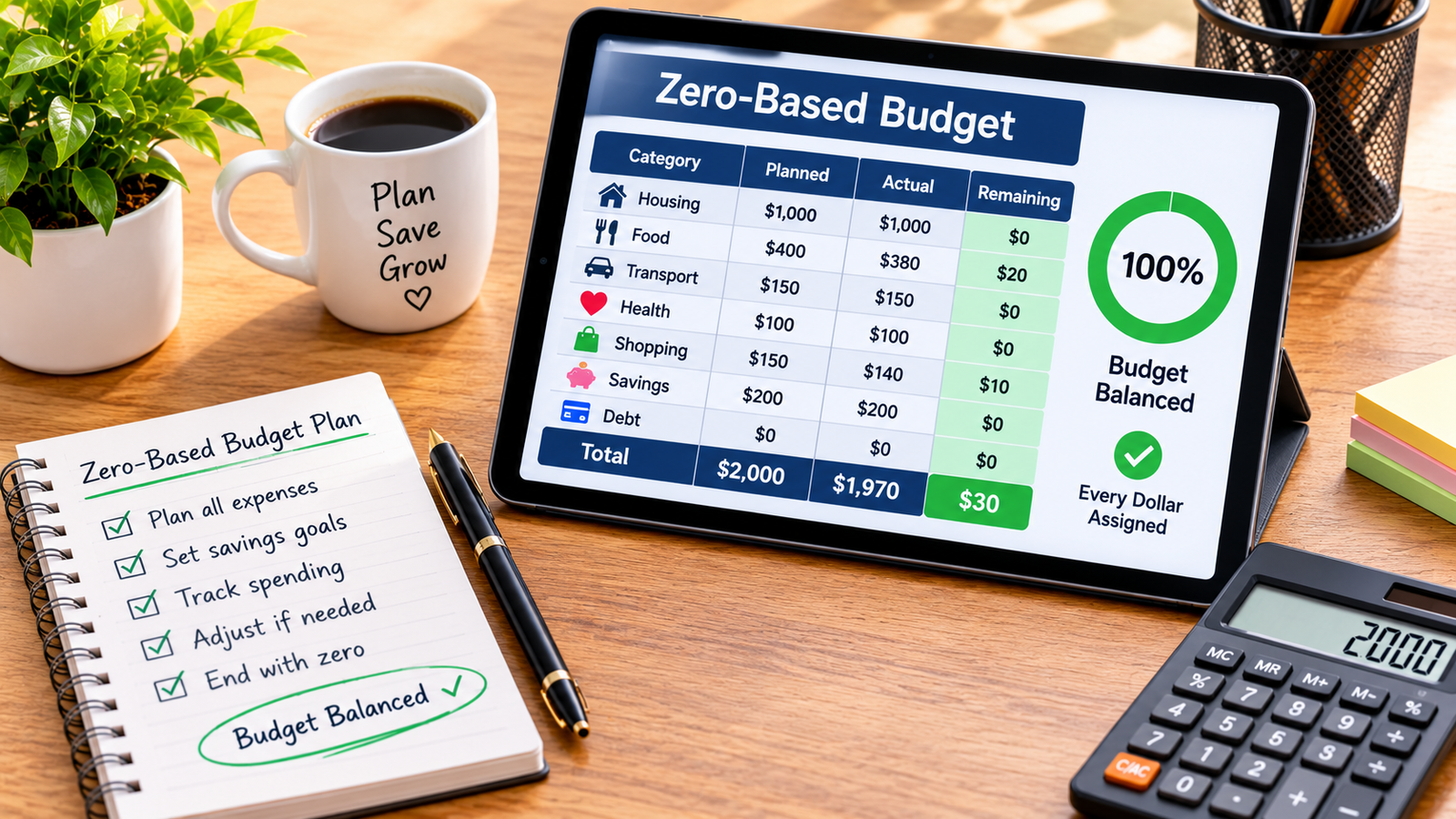
In addition to setting up your spreadsheet or app, incorporating smart daily habits ensures long-term budgeting success:
-
Include a Miscellaneous Buffer: Always allocate a small $50 to $100 buffer category for unexpected minor expenses so your budget does not break.
-
Track Expenses Weekly: Regularly log your purchases throughout the month to ensure you stay within your designated category limits.
-
Adjust for Seasonal Expenses: Furthermore, plan ahead for irregular costs like birthday gifts or holiday travel by creating dedicated sinking funds.
Additionally, maintaining smooth digital habits protects your devices while tracking spending online, as explained in how-to-stop-pop-up-ads-on-android. Furthermore, keeping comfortable posture habits like simple-wrist-exercises-for-computer-users makes updating your monthly spreadsheets much easier on your body.
Want More Insights to Grow Your Digital Presence & Daily Productivity?
Whether you need to fix your website’s technical performance or build a smarter, burnout-free work routine, NewsUpTo delivers practical guides to keep you ahead.





Leave feedback about this