

Modern wearables like smartwatches and smart rings do far more than simply log step counts or measure total hours of sleep. One of the most sensitive biomarkers captured by contemporary sensors is overnight wrist or skin temperature.
While checking your body temperature with a traditional oral thermometer only gives a snapshot when you already feel sick, continuous overnight skin temperature tracking measures microscopic thermal trends while your body rests. Learning how to use overnight temperature tracking to predict recovery and oncoming illness allows you to catch physical stress days before symptoms surface, enabling you to rest early and optimize your training.
1. Skin Temperature vs. Core Body Temperature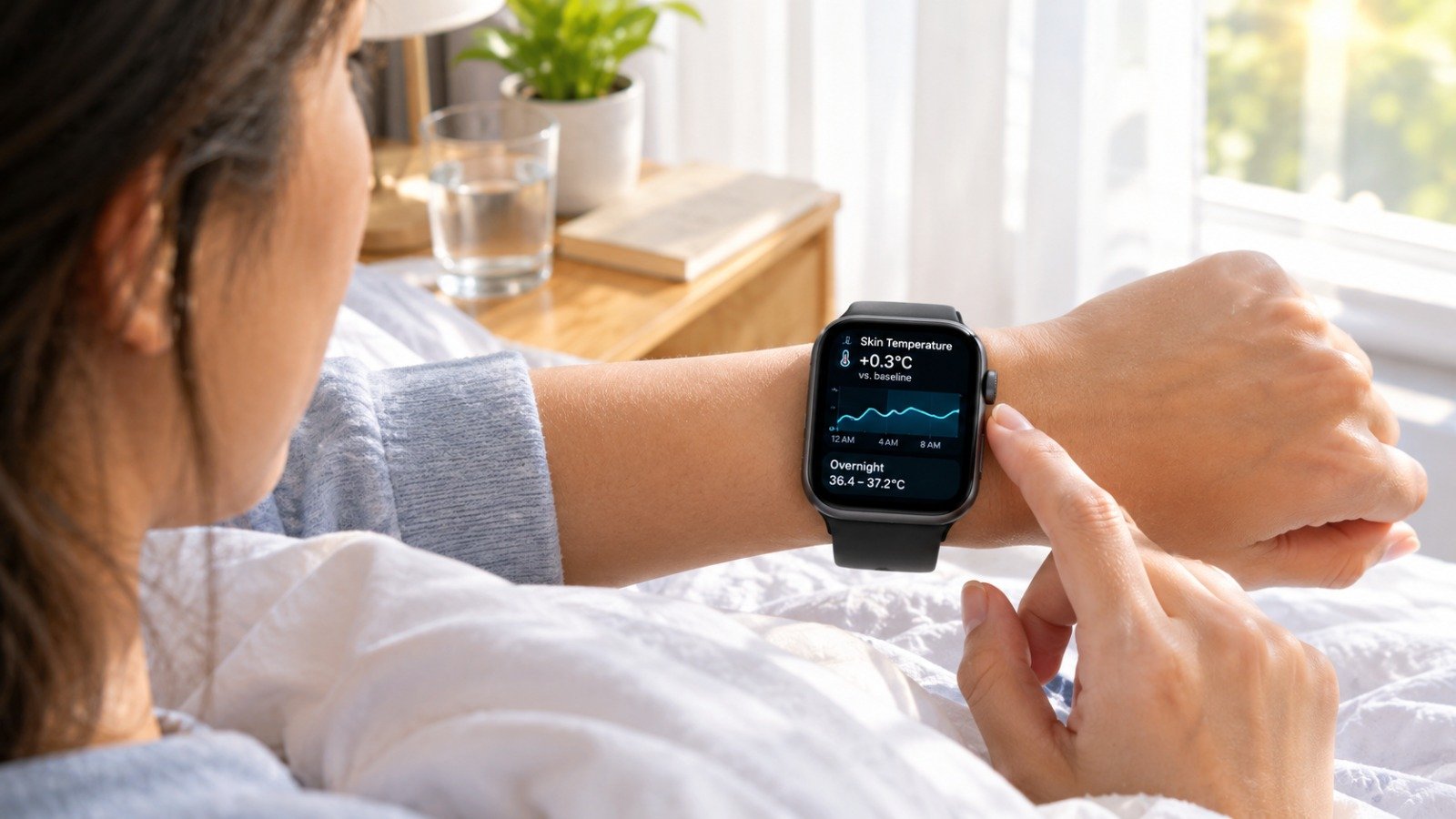
Understanding how wearable sensors record temperature data is essential for accurate interpretation.
Key Temperature Tracking Principles
-
Relative Baseline vs. Absolute Values: Smartwatches do not measure internal core body temperature (like a medical oral thermometer). Instead, they track relative deviation from your rolling 14-day average skin temperature.
-
Overnight Measurement Environment: Wearables take measurements during deep sleep because external environment variables (such as ambient room temperature, physical activity, and clothing) remain relatively stable.
-
Peripheral Circulation: Skin temperature reflects how your autonomic nervous system controls blood flow to your extremities (vasodilation and vasoconstriction) to regulate heat.
2. Interpreting Overnight Temperature Deviations
Evaluating your morning temperature graph against other sleep metrics helps you diagnose whether your body is recovering or struggling under load.
| Overnight Deviation | Physiological State | What It Means for Your Day |
| Normal Baseline ($\pm 0.1^\circ\text{C}$ to $0.3^\circ\text{C}$) | Optimal Homeostasis | Full recovery. Your immune system and nervous system are balanced. Ready for intense workouts. |
| Moderate Elevated ($+0.5^\circ\text{C}$ to $+0.9^\circ\text{C}$) | Systemic Stress / Late Meals / Alcohol | Mild fatigue, intense late workout strain, or early immune response. Reduce training load. |
| Significant Spike ($+1.0^\circ\text{C}$ or Higher) | Immune System Fighting Sickness | Your body is mounting an active fever response against a viral or bacterial pathogen. Cancel workouts and rest. |
| Sustained Low ($-0.5^\circ\text{C}$ or Lower) | Environmental / Extended Fasting | Often caused by a cold bedroom, improved circadian cooling, or prolonged fasting. |
3. How Sickness Triggers Early Temperature Spikes
When a viral or bacterial pathogen enters your body, your immune system releases inflammatory proteins called cytokines long before you develop a cough, sore throat, or muscle aches.
These cytokines signal the brain’s hypothalamus to elevate body temperature to make the internal environment hostile to invaders. During sleep, this manifests as increased cutaneous blood flow, causing your wearable sensor to detect a clear temperature spike 24 to 48 hours before you feel noticeably sick.
4. Building an Actionable Recovery Workflow
Integrating temperature data with other wearable metrics creates an early-warning defense system for your health.
-
Combine with Resting Heart Rate: Cross-reference your temperature data with insights from our guide on how to interpret smartwatch resting heart rate drops and spikes. An overnight temperature spike paired with an elevated resting pulse is a primary indicator of oncoming illness.
-
Adjust Workout Planning: Use the wearable recovery strategies outlined in our guide to use smartwatches to optimize sleep and exercise to pivot away from high-intensity interval training toward light walking or stretching when temperatures rise.
-
Support Immune Recovery: When your wearable flags an early temperature shift, support your body using simple nutrition and hydration protocols from our equipment-free exercise and healthy meal prep guide.
Want More Insights to Grow Your Digital Presence & Daily Productivity?
Whether you need to fix your website’s technical performance or build a smarter, burnout-free work routine, NewsUp To delivers practical guides to keep you ahead.




Leave feedback about this