

Lacking space or access to a commercial gym is no longer an excuse to skip exercise. You do not need rows of heavy machinery or large rooms to build strength, burn calories, and improve cardiovascular health.
With structured full-body routines, you can turn a small bedroom, living room corner, or studio apartment into an efficient training space. By prioritizing compound exercises that work multiple muscle groups simultaneously, you can achieve a complete workout within a 6×6 foot area (roughly the size of a yoga mat).
Here is your complete guide to effective full-body workout routines designed specifically for small spaces.
The Benefits of Small-Space Full-Body Routines
Training in compact spaces offers several practical advantages for long-term health and consistency.
-
Zero Commute and High Convenience: Eliminating travel to a gym saves time and helps build a consistent daily habit.
-
Minimal to No Equipment Required: Bodyweight exercises or a single pair of dumbbells are enough to target every major muscle group.
-
Quiet and Neighbor-Friendly: Low-impact routines keep noise levels low, making them ideal for apartment living above neighbors.
-
Full-Body Efficiency: Full-body sessions burn more calories per minute than isolated muscle workouts by keeping your heart rate elevated.
Routine 1: 20-Minute No-Equipment Bodyweight Circuit
This routine requires zero equipment and zero jumping, making it completely silent for downstairs neighbors while delivering an effective burn.
Circuit Structure
Perform each exercise for 45 seconds, followed by 15 seconds of rest. Complete 3 to 4 total rounds, resting 60 seconds between rounds.
| Exercise Name | Primary Target Area | Small Space Modification |
| Tempo Bodyweight Squats | Quads, Glutes, Core | Lower down for 3 seconds, pause at bottom, stand up quickly. |
| Push-Up to Shoulder Taps | Chest, Shoulders, Core | Perform on knees or elevated against a sturdy desk if needed. |
| Alternating Reverse Lunges | Hamstrings, Glutes, Balance | Step backward instead of forward to protect knees and save floor space. |
| Doorway or Towel Rows | Upper Back, Biceps | Grip a sturdy doorframe or use a bedsheet anchored behind a closed door. |
| Plank with Knee Drive | Core, Abdominals, Shoulders | Keep hips level and drive knees slowly toward your chest. |
Routine 2: Minimalist Dumbbell Full-Body Strength Routine
If you own a single pair of light-to-medium dumbbells or adjustable weights, this routine adds resistance to accelerate strength and muscle building.
Workout Structure
Complete 10 to 12 controlled repetitions for each exercise. Repeat for 3 total sets with 45 seconds rest between exercises.
1. Goblet Squats
Hold a single dumbbell vertically against your chest. Keep your feet shoulder-width apart, lower your hips until your thighs are parallel to the floor, and drive up through your heels.
2. Dumbbell Bent-Over Rows
Hinge forward at your hips at a 45-degree angle with a straight back. Pull the weights up toward your waist while squeezing your shoulder blades together at the top of the movement.
3. Romanian Deadlifts
Hold dumbbells in front of your thighs. Push your hips backward with a slight bend in your knees until you feel a deep stretch in your hamstrings, then squeeze your glutes to return to standing.
4. Overhead Shoulder Press
Stand tall with core engaged. Press dumbbells straight up overhead until your arms are fully extended, then lower them back down to shoulder height with control.
5. Glute Bridge with Chest Press
Lie flat on your back with knees bent and feet flat on the floor. Lift your hips into a glute bridge position while simultaneously pressing dumbbells over your chest.
Explore our full breakdown of space-saving fitness gear in our home gym minimal equipment guide.
How to Apply Progressive Overload in Small Spaces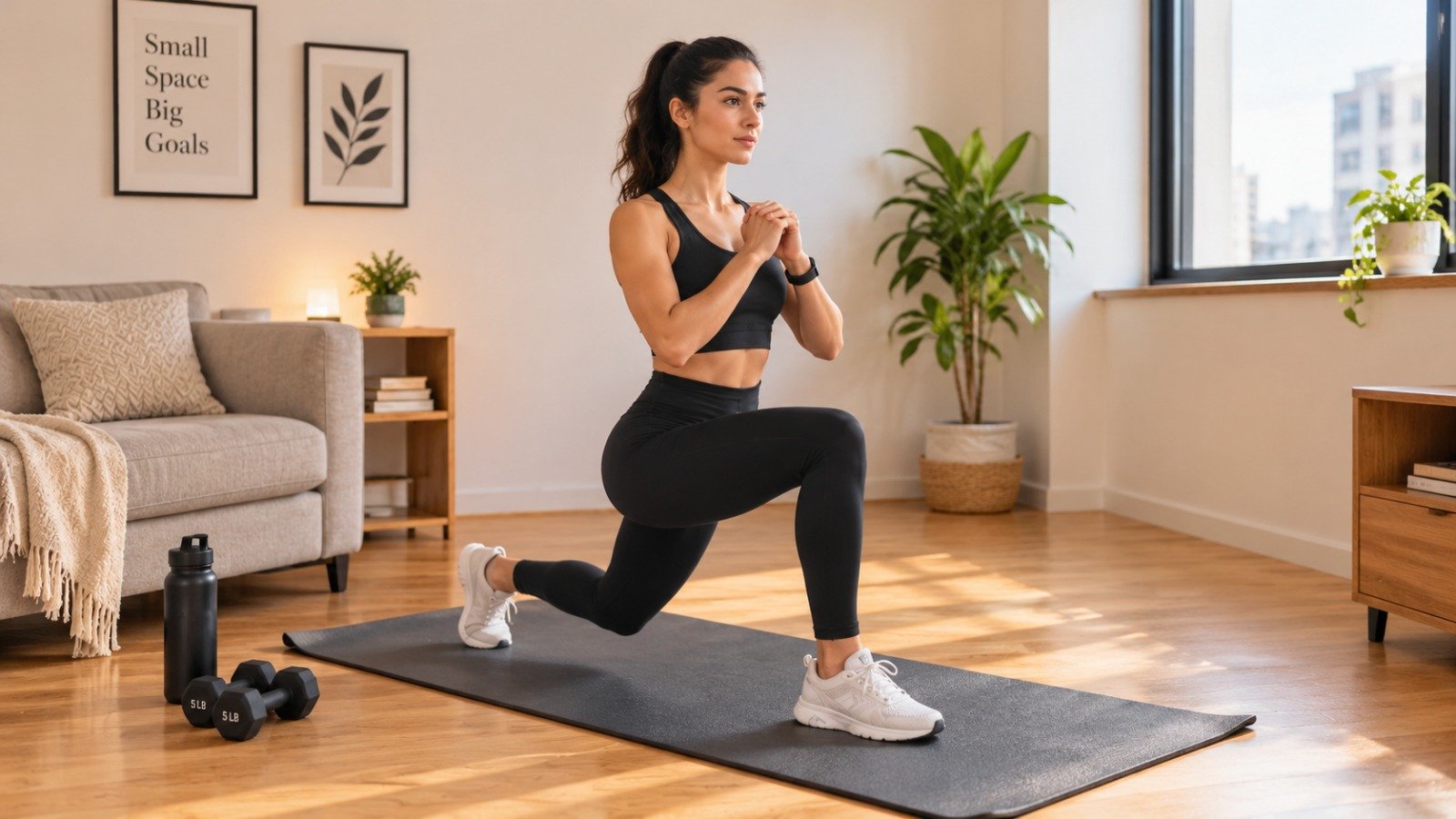
To continue making fitness progress without buying heavier weights or larger gear, apply progressive overload through alternative techniques:
-
Increase Repetitions: Gradually increase from 10 reps to 15 or 20 reps per set over time.
-
Decrease Rest Intervals: Cut rest times between sets from 60 seconds down to 30 seconds to increase endurance conditioning.
-
Slow Down the Tempo: Spend 3 to 4 seconds lowering into a squat or push-up to increase muscle tension.
-
Use Single-Leg Variations: Shift from bilateral squats to single-leg split squats or step-ups to double the effective workload on each leg.
Pair your workout consistency with proper fueling by reviewing our post workout nutrition tips.
Key Safety and Noise Reduction Tips for Apartment Workouts
-
Invest in a High-Density Exercise Mat: A thick mat cushions your joints and dampens noise from foot contact on hardwood floors.
-
Avoid High-Impact Jumping: Substitute jump squats with rapid calf-raise squats, and swap high knees with fast standing mountain climbers.
-
Clear Surrounding Objects: Ensure a clear arm-span radius around your body to avoid hitting furniture, lamps, or walls during movements.
For strategies on sticking to a daily schedule, read our practical guide on how to stay consistent with home workouts.
Want More Insights to Grow Your Digital Presence & Daily Productivity?
Whether you need to fix your website’s technical performance or build a smarter, burnout-free work routine, NewsUp To delivers practical guides to keep you ahead.






Leave feedback about this