

Starting a service-based business as a freelancer, agency owner, or consultant comes with a core challenge: zero brand recognition and an empty client list. In the early stages, waiting passively for inbound traffic or running paid ad campaigns rarely works because you lack social proof, reviews, and case studies.
Acquiring your initial client cohort requires executing focused, hands-on strategies. Instead of building complex automated funnels, early momentum comes from direct outreach, offering immense value upfront, and leveraging existing connections.
Below is a practical 5-step framework detailing how to get first 10 clients for service business growth using low-cost, repeatable tactics.
1. Leverage Your Warm Network First (Clients 1 to 3)
The fastest path to your initial sales is reaching out to people who already know, like, and trust you. Your existing network carries established trust, which eliminates early sales friction.
-
Audit Your Contacts: List former colleagues, industry contacts, college friends, past employers, and professional acquaintances across LinkedIn, email, and phone contact lists.
-
Focus on Advice, Not High-Pressure Sales: Send personal messages explaining your new service. Ask for feedback or referrals rather than making aggressive sales pitches (e.g., “I recently launched a corporate web design service. Do you know any small business owners looking to overhaul their online presence?”).
-
Reconnect with Past Partners: Reach out to previous employers or freelancing partners to see if they have overflow work or projects they lack the bandwidth to handle.
If you are bootstrapping your operations on a shoestring budget, check our guide on how to start a service business with no money for low-overhead setups.
2. Pitch Targeted Cold Outreach with Value in Advance (Clients 4 to 6)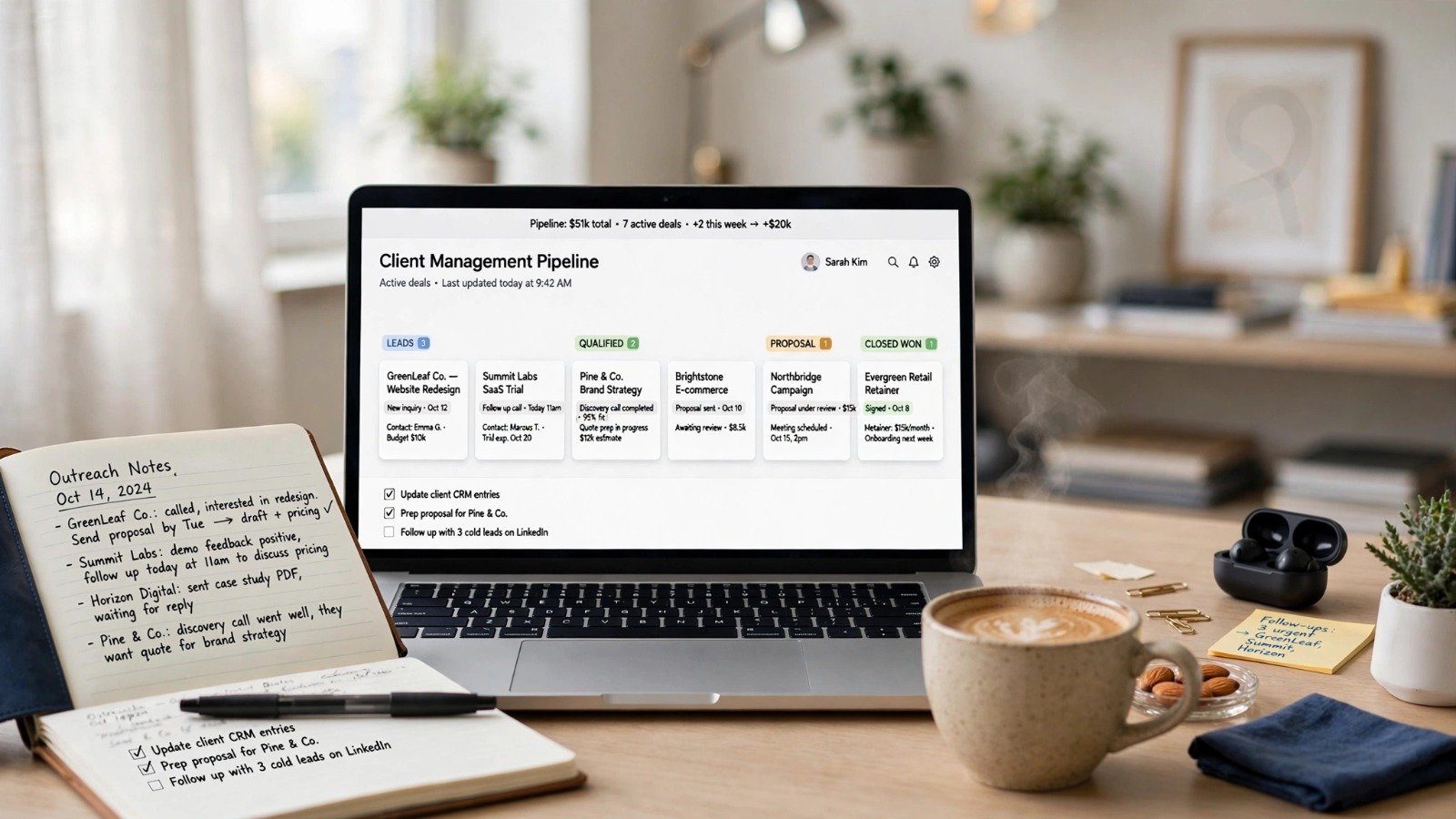
Once you exhaust your immediate contacts, transition to cold outreach. Mass sending generic, templated cold emails rarely works. Success requires hyper-personalized outreach that provides value upfront.
-
Identify Ideal Prospects: Research 30 to 50 specific businesses that fit your target client profile perfectly.
-
Audit Their Pain Points: Spot a clear problem you can solve before making contact. For example, if you offer SEO services, find broken links or missing meta descriptions on a target company’s website.
-
Deliver Value in Advance: Send a short, customized video or teardown demonstrating the problem and showing a partial solution for free. Showing proof of your capabilities builds instant credibility.
-
Include a Low-Friction Call to Action: End your message with a simple question, such as, “I created a short 2-minute video showing how to fix this layout issue on your landing page. Would it be okay if I sent it over?”
3. Offer Beta Pricing in Exchange for Case Studies (Clients 7 to 8)
When you lack a portfolio, prospects view hiring you as a financial risk. You can reduce this friction by trading discounted rates or extended deliverables for social proof.
-
Create a Beta Offer: Offer your service at a reduced introductory rate for a limited number of clients in exchange for detailed testimonials, logo usage rights, and a written case study upon completion.
-
Cap the Availability: Explicitly limit the offer (e.g., “I am taking on three founding clients at this special rate in exchange for a detailed review upon completion”).
-
Focus Heavily on Client Results: Treat these beta clients as flagship case studies. Over-delivering results for these accounts provides the proof needed to charge full market prices for future clients.
When onboarding new clients, documenting operational workflows using standard operating procedures for small business ensures your team delivers consistent quality as client numbers grow.
4. Build a Structured Referral Engine (Clients 9 to 10)
Satisfied clients are your most effective sales team. Once you deliver results for your initial accounts, turn them into an active referral pipeline.
-
Time the Request Correctly: Ask for referrals immediately after delivering a major win or receiving positive feedback, when client satisfaction is highest.
-
Make Referral Requests Specific: Instead of asking, “Do you know anyone who needs my services?”, ask, “Do you know two other agency founders in your network who are struggling to scale their content pipeline?”
-
Incentivize Referrals: Offer a formal referral reward, such as a discount on next month’s retainer or a gift card, to encourage ongoing client recommendations.
5. Participate in Active Niche Communities
Your prospective clients gather online daily to discuss operational challenges and seek advice.
-
Identify Community Hubs: Join specialized Facebook groups, Slack channels, Reddit communities, and LinkedIn groups where your target audience hangs out.
-
Provide Expert Answers: Search for posts where business owners ask questions related to your niche. Provide detailed, helpful answers without pitching your services directly.
-
Convert Inquiries to Discovery Calls: As community members n
-
otice your expertise, move conversations to direct messages to discuss customized support packages.
Maintaining clear communication and professional boundaries when dealing with early client feedback is essential; learn key management techniques in our guide on how to handle difficult customers in business.
Want More Insights to Grow Your Digital Presence & Daily Productivity?
Whether you need to fix your website’s technical performance or build a smarter, burnout-free work routine, NewsUpTo delivers practical guides to keep you ahead.






Leave feedback about this