
When building a healthy personal budget, setting money aside for the future is essential. However, many beginners put all their extra savings into a single bank account without separating their goals. This often leads to confusion when large bills arrive.
To manage your cash flow effectively, financial experts recommend splitting your savings into two distinct categories: sinking funds and emergency funds. While both help protect your overall financial health, they serve completely different purposes in your monthly spending plan.
Below is a complete, practical breakdown explaining the sinking fund vs emergency fund difference and how to use both strategies together.
1. What Is a Sinking Fund?
A sinking fund is a dedicated savings category for a specific, anticipated cost that you know is coming in the future. Instead of facing a huge bill all at once, you break the total cost down into manageable monthly contributions.
-
Purpose: To cover predictable expenses without breaking your monthly budget or relying on credit cards.
-
Timeline: Short to medium-term (a few months up to a year).
-
Target Amount: Exact or closely estimated based on projected costs.
Common Examples of Sinking Funds
-
Annual Expenses: Property taxes, car registration, or annual software subscriptions.
-
Planned Life Events: Upcoming vacations, wedding costs, or holiday gift shopping.
-
Routine Upkeep: Planned home renovations, annual vet checkups, or routine car maintenance like tires.
Building targeted savings buckets works naturally alongside standard frameworks explained in how to make a budget for beginners.
2. What Is an Emergency Fund?
An emergency fund is a general cash buffer designed to protect you from true, unexpected financial crises. It acts as insurance for your lifestyle, preventing you from going into debt when life takes an unplanned turn.
-
Purpose: To provide total financial stability during major life disruptions.
-
Timeline: Held indefinitely until a genuine emergency occurs.
-
Target Amount: Typically 3 to 6 months worth of essential living expenses.
True Emergency Fund Uses
-
Sudden loss of employment or income stream.
-
Urgent medical treatments or unexpected dental bills.
-
Critical home repairs, such as a burst water pipe or broken heating system in winter.
3. Key Differences Side by Side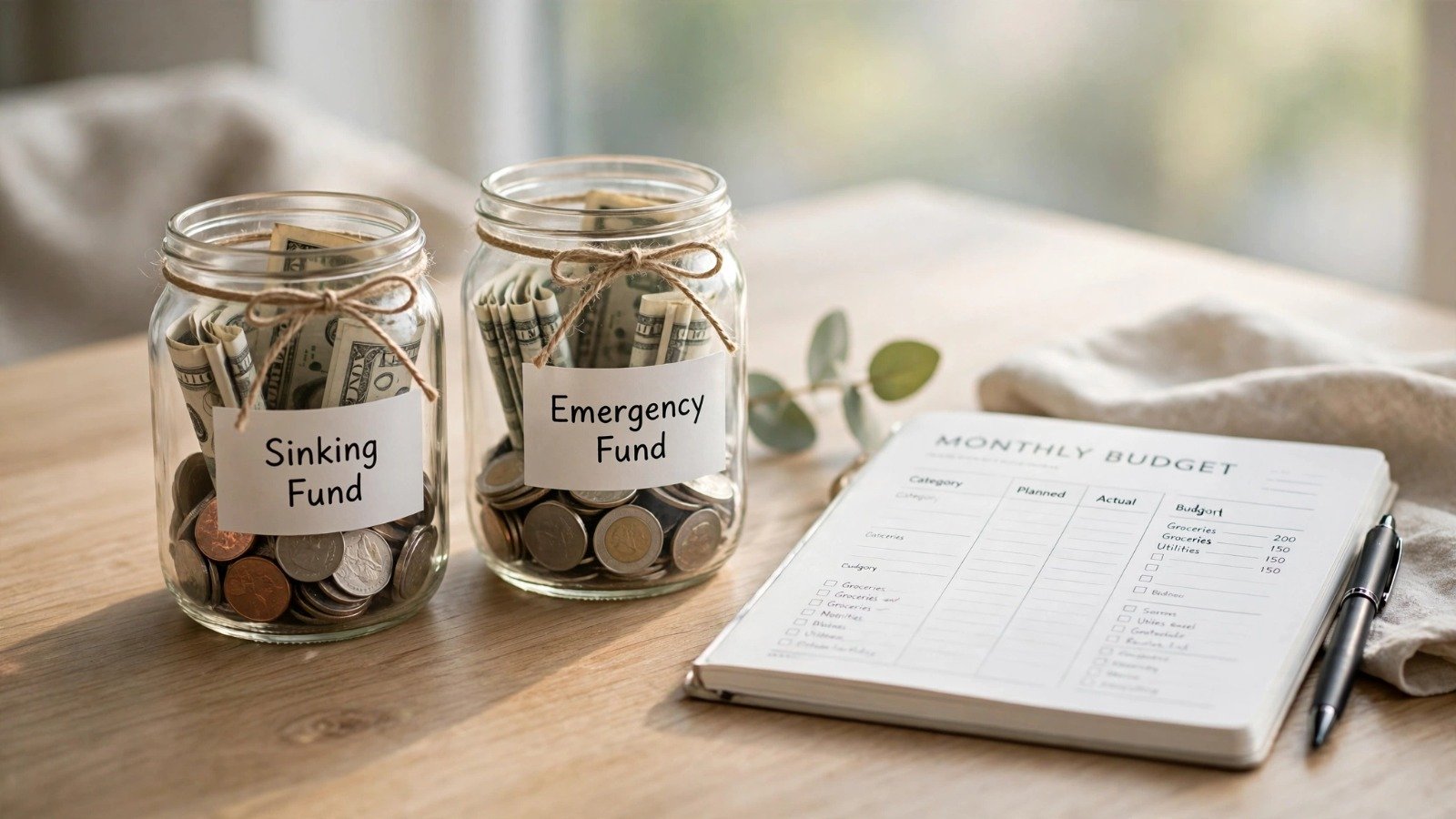
Understanding how these two savings tools compare helps you categorize every dollar correctly:
| Feature | Sinking Fund | Emergency Fund |
| Primary Goal | Pay for expected future costs | Protect against unpredictable crises |
| Expense Type | Known and planned | Unknown and sudden |
| Target Amount | Specific dollar amount per goal | 3 to 6 months of essential living expenses |
| Usage Frequency | Spent regularly as plans occur | Touched rarely, only in true emergencies |
| Guilt Level | Zero guilt (money is meant to be spent) | Saved for protection, kept untouched |
Keeping these reserves in interest-bearing accounts ties directly into our guide explaining what is apy in savings account. Avoiding credit cards during unexpected events also aligns with principles in our good debt vs bad debt explanation.
4. How to Structure Both Funds in Your Bank Account
Managing separate savings goals does not require dozens of complicated bank accounts:
-
Use Multiple Savings Sub-Accounts: Many modern banks and online institutions allow you to create labeled sub-accounts (or “savings buckets”) under a single main account.
-
Automate Your Monthly Savings: Set up automatic transfers on payday. Direct a fixed amount toward your emergency fund until full, and distribute remaining savings across active sinking funds.
-
Refill After Spending: When you spend from a sinking fund for its intended goal, you simply reset that specific balance. If you ever need to draw from your emergency fund, prioritize refilling that safety net back to its 3 to 6 month target as soon as possible.
Want More Insights to Grow Your Digital Presence & Daily Productivity?
Whether you need to fix your website’s technical performance or build a smarter, burnout-free work routine, NewsUpTo delivers practical guides to keep you ahead.



Leave feedback about this