

Carrying multiple debts, such as credit card balances, personal loans, or auto financing, can make daily financial management feel overwhelming. Trying to make extra payments across several accounts without a structured plan often leads to minimal progress and frustration.
To break free from debt effectively, personal finance experts recommend using one of two primary strategies: the Debt Snowball or the Debt Avalanche method. Both systems require making minimum payments on all accounts while directing extra funds toward a single target balance.
Understanding the fundamental differences between the snowball vs avalanche debt payoff method will help you choose the strategy that aligns best with your financial habits.
1. How the Debt Snowball Method Works
The Debt Snowball method prioritizes balance size over interest rates. Designed around human psychology, this strategy creates early momentum to help you stay committed to your goal.
Step-by-Step Implementation:
-
List Your Debts: Write down all your balances from smallest to largest, ignoring interest rates.
-
Pay Minimums: Make the required minimum payment on every debt every month.
-
Attack the Smallest Balance: Direct all extra cash toward the smallest balance until it is entirely paid off.
-
Roll It Over: Once the smallest debt is eliminated, take its full payment amount and add it to the minimum payment of the next-smallest balance.
-
The Main Advantage: Quick wins. Eliminating an entire balance within a few months provides immediate psychological gratification, proving that your strategy is working.
-
The Drawback: You may pay slightly more in total interest charges over time because high-interest accounts remain open longer.
Before committing extra monthly funds to either payoff strategy, establish a firm baseline by applying steps from how to make a budget for beginners.
2. How the Debt Avalanche Method Works
The Debt Avalanche method prioritizes mathematical efficiency. This approach minimizes the total interest you pay to lenders while helping you become debt-free in the shortest time possible.
Step-by-Step Implementation:
-
List Your Debts: Write down all your balances ordered from highest interest rate to lowest interest rate.
-
Pay Minimums: Maintain minimum payments across all active accounts.
-
Attack High Interest First: Put every available extra dollar toward the balance with the highest annual interest rate.
-
Cascade Your Payments: Once your highest-interest balance reaches zero, roll its full payment allocation into the debt with the second-highest interest rate.
-
The Main Advantage: Maximum interest savings. By eliminating high-interest credit card charges first, you keep more of your hard-earned money in your bank account.
-
The Drawback: Slow initial progress. If your highest-interest debt carries a large balance, it may take many months to clear your first account, which can test your discipline.
If high credit card charges make up the bulk of your high-rate accounts, understanding principles from our good debt vs bad debt explanation can help you avoid taking on consumer liabilities again.
3. Side-by-Side Comparison: Snowball vs. Avalanche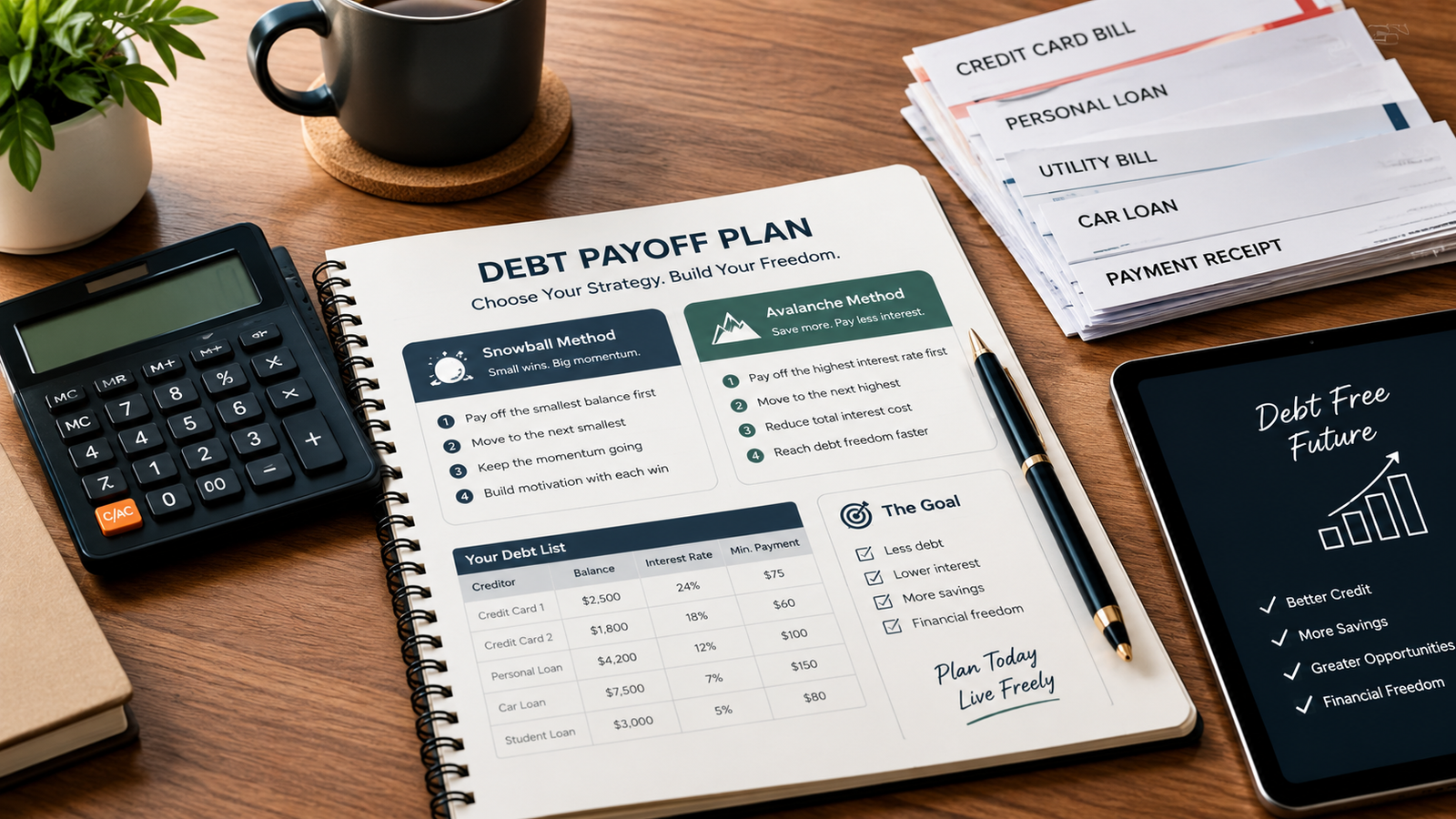
| Feature | Debt Snowball Method | Debt Avalanche Method |
| Primary Focus | Smallest balance first | Highest interest rate first |
| Primary Benefit | Fast psychological motivation | Maximum overall interest savings |
| Best For | People motivated by visual progress | Mathematically driven individuals |
| Pace of First Win | Very fast (clears small accounts) | Depends on balance size |
4. How to Choose the Best Method for You
Choosing between snowball and avalanche depends on your personal financial mindset and habits.
-
Choose the Debt Snowball if: You have struggled to stay committed to financial plans in the past, feel overwhelmed by seeing multiple monthly statements, or need quick proof of progress to stay motivated.
-
Choose the Debt Avalanche if: You are disciplined, hate paying unnecessary interest charges, and are comfortable maintaining a long-term plan without needing immediate account closures.
Regardless of which route you choose, maintaining a modest safety net outlined in how to build an emergency fund prevents unexpected expenses from forcing you to rely on credit cards again mid-journey.
Want More Insights to Grow Your Digital Presence & Daily Productivity?
Whether you need to fix your website’s technical performance or build a smarter, burnout-free work routine, NewsUpTo delivers practical guides to keep you ahead.




Leave feedback about this