
When you send cryptocurrency to another wallet, swap tokens on a decentralized exchange, or buy an NFT, you will always notice a small additional cost added to your transaction. In the Web3 ecosystem, this charge is known as a gas fee.
For many beginners, gas fees can seem confusing or surprisingly expensive. However, gas fees play a crucial role in keeping blockchain networks secure, running smoothly, and free from spam.
Below is a simple explanation of what gas fees are in crypto, why they exist, and practical ways to keep your transaction costs low.
1. What Is a Gas Fee? (The Car Analogy)
To understand gas fees easily, think of a blockchain as an highway and your crypto transaction as a car trip.
-
The Fuel: To drive your car from point A to point B, you need gasoline.
-
The Payment: On a blockchain like Ethereum, executing a transaction requires computational work. The “gas” is the fuel, and the fee is what you pay to cover that computing power.
-
The Service Provider: The gas fee goes directly to network validators or miners who spend energy and equipment resources to record your transaction safely on the public ledger.
Different operations require different amounts of computational energy. Sending a simple token transfer takes very little gas, while interacting with complex smart contracts (like trading on a decentralized exchange) requires significantly more gas.
2. Why Do Blockchains Charge Gas Fees?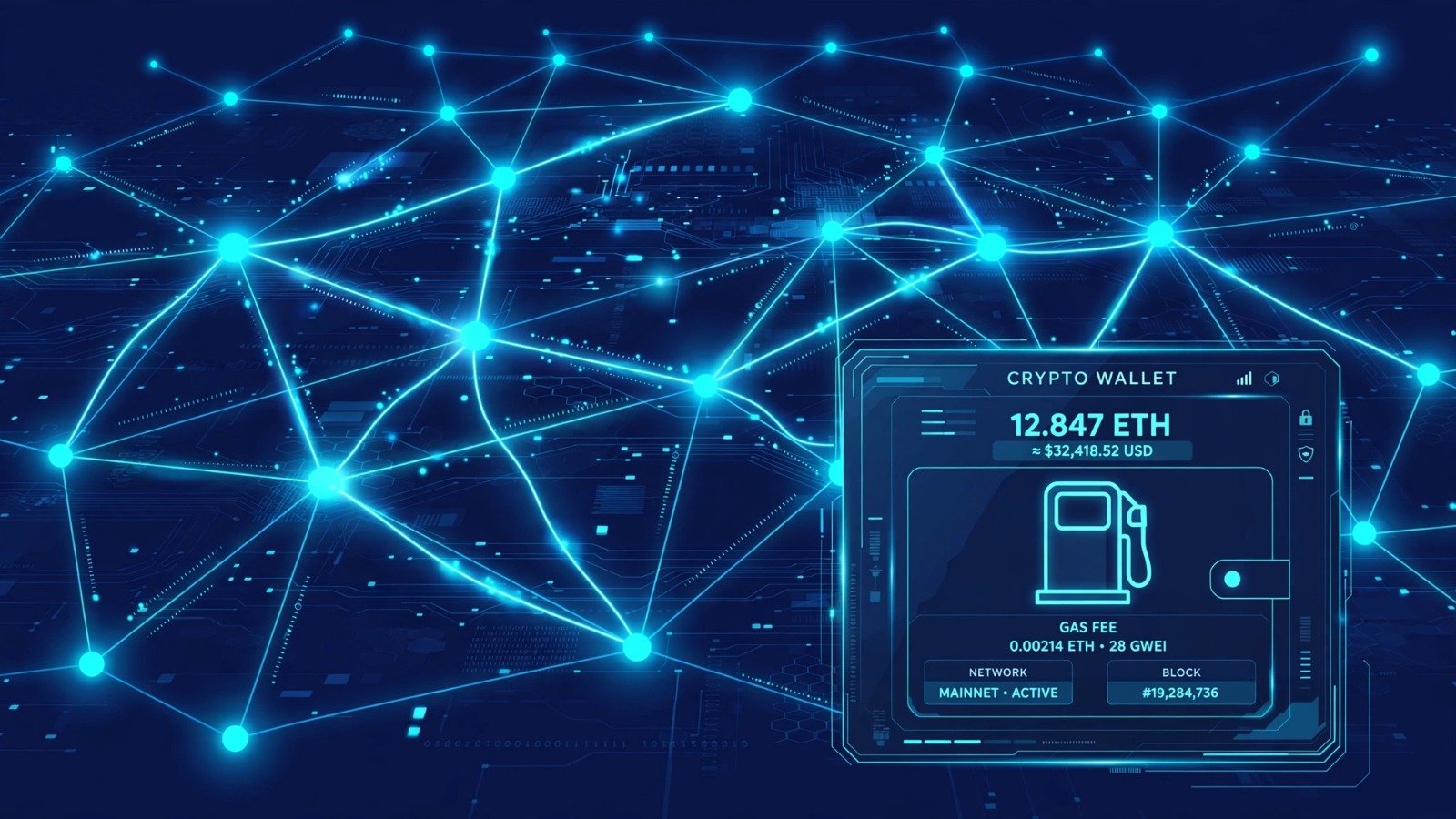
Gas fees exist for two primary structural reasons:
A. Network Security and Spam Prevention
Without transaction fees, bad actors could easily flood the blockchain with millions of fake transactions, slowing down the system or causing it to crash. Requiring a fee for every action makes spam attacks prohibitively expensive.
B. Incentive for Network Operators
Blockchains do not run on central servers owned by a single company. Thousands of independent computers (validators) maintain the network. Gas fees reward these operators for contributing hardware, electricity, and security.
Security remains critical in every step of self-custody management. To keep your recovery words protected alongside your transactions, read our guide on how to backup crypto seed phrase safely. To recognize potential wallet tracking risks, check what is a crypto dusting attack.
3. Why Are Gas Fees Sometimes So High?
Gas fees are determined by network congestion (supply and demand) rather than the monetary value of your transfer.
-
Peak Hours: When thousands of users try to trade or mint popular NFTs at the exact same time, space on the blockchain becomes limited.
-
Bidding Mechanism: Users can pay higher fees to prioritize their transactions. Validators prioritize transactions with higher fees, causing base costs to spike during busy hours.
-
Transaction Complexity: A simple transfer between two wallets uses minimal gas, while a multi-step token swap uses complex smart contract logic, increasing the final cost.
4. Simple Ways to Save Money on Gas Fees
You do not always have to pay high transaction costs. Follow these practical tips:
| Strategy | Action | Benefit |
| Avoid Peak Hours | Transact during nights or weekends when global activity drops | Lower network demand equals cheaper gas fees |
| Use Layer 2 Networks | Move transactions to Layer 2 chains like Arbitrum, Optimism, or Polygon | Transactions cost fractions of a cent compared to Layer 1 |
| Set Custom Gas Limits | Adjust gas settings inside wallets like MetaMask during non-urgent transfers | Prevents overpaying during sudden traffic spikes |
To learn how scaling solutions handle thousands of transactions at minimal cost, read our layer 1 vs layer 2 blockchain simple explanation.
Want More Insights to Grow Your Digital Presence & Daily Productivity?
Whether you need to fix your website’s technical performance or build a smarter, burnout-free work routine, NewsUpTo delivers practical guides to keep you ahead.



Leave feedback about this